Breast Implant Revision · Miami Beach, FL

Oversized Implant Volume & Breast Ptosis Correction

Implants that exceed your tissue's capacity don't just look wrong — they cause progressive sagging, stretch damage, back pain, and long-term structural problems. Dr. Tachmes corrects oversized implants with volume reduction and mastopexy when needed, restoring natural proportion and long-term tissue health. Serving patients across Florida and the Southeast US.

Submit Your Case for Review

Or text Dr. Tachmes directly: 786-603-9074 — no coordinators.

Breast Implant Size Reduction & Revision in Miami

When Implants Are Too Large for Your Body

Every body has a maximum implant size it can support sustainably. When implant volume exceeds what the breast tissue and skin envelope can hold, the effects compound over years: the skin stretches, the breast descends past the natural fold, tissue thins, and the breast loses structural integrity.

This isn't vanity — it's physics. The weight and volume of an oversized implant continuously stretches the tissue it sits in. What looks acceptable at one year post-surgery often looks dramatically different at five or ten years.

The problem is compounded when patients have had multiple revision surgeries that each further stressed the tissue, or when pregnancy and weight changes have occurred with large implants in place.

Breast ptosis (drooping or sagging) develops when the breast skin envelope stretches faster than the tissue can maintain. With oversized implants, ptosis is nearly inevitable over time. The nipple descends relative to the breast mound, and the lower pole skin becomes lax and stretched.

Signs Your Implants May Be Too Large

• Breasts appear to "bottom out" or sag significantly below the fold

• Nipples point downward rather than forward

• Breasts feel heavy and cause chronic back, neck, or shoulder pain

• Breast skin appears thin or translucent — implant ridges visible through skin

• Stretch marks on breast skin from progressive tissue stretching

• Bra band size has increased as implants push tissue outward and downward

• Difficulty finding properly fitting clothing due to disproportionate chest size
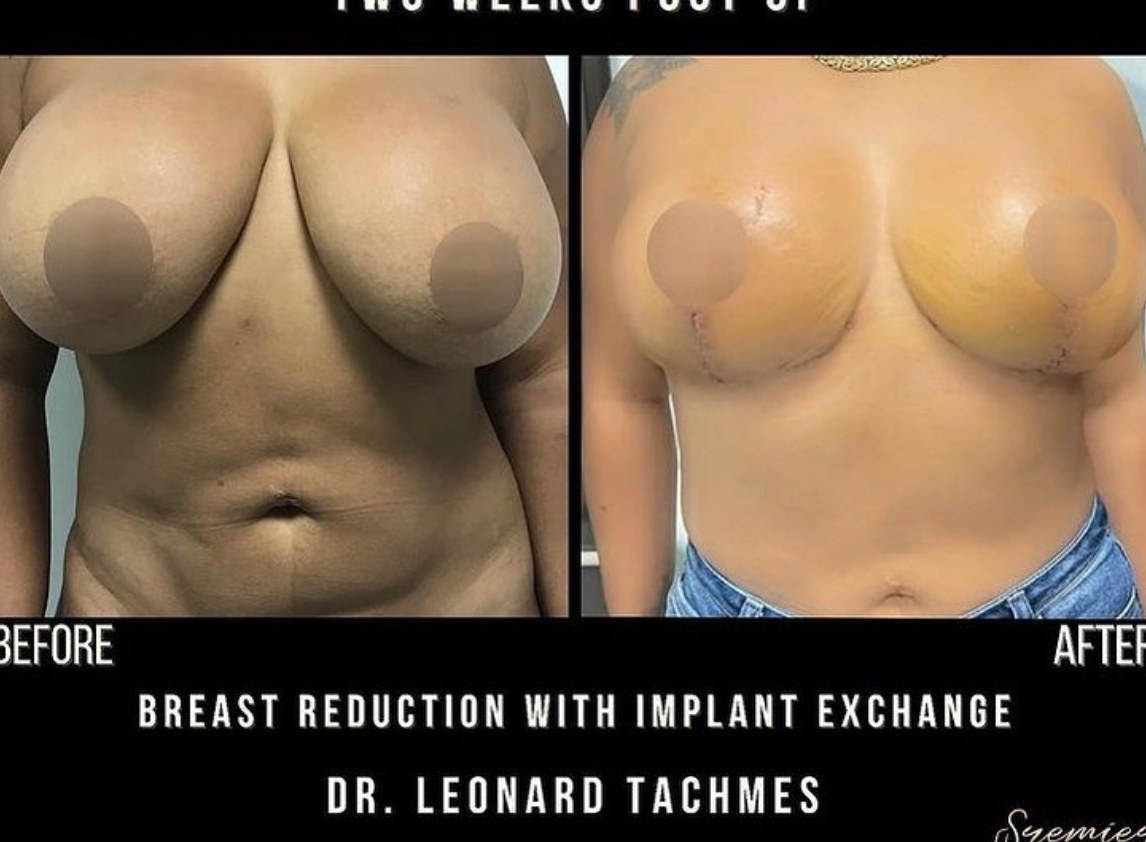
Ptosis Classification

Grade I (mild): Nipple at fold level. Grade II (moderate): Nipple below fold. Grade III (severe): Nipple pointing down toward floor.

Tissue Thinning

Skin stretched over large implants becomes thin and vulnerable. Rippling, implant visibility, and risk of skin complications increase progressively.

Physical Symptoms

Chronic back and neck pain, bra strap grooving into shoulders, difficulty exercising — all common with oversized implants.

Secondary Deformities

Bottoming out, double bubble, and lateral malposition are all more common with oversized implants as the tissue cannot support them long-term.

How Dr. Tachmes Restores Proportion & Support

Correction requires a personalized plan based on the degree of ptosis, skin laxity, tissue quality, and patient goals. The core principles are:

  • Implant exchange to appropriate volume — the most critical step. A properly sized implant that matches the patient's tissue dimensions is selected. This often means a significant reduction in volume — sometimes 200–400cc smaller than current implants.
  • Mastopexy (breast lift) — when significant ptosis is present, a lift is required to reposition the nipple-areola complex and remove excess skin. This is performed simultaneously with the implant exchange in most cases.
  • Pocket repair — the stretched pocket is repaired to fit the new, smaller implant. Capsulorrhaphy closes off excess space to prevent the implant from re-stretching the pocket.
  • Tissue reinforcement — ADM or mesh may be used to provide additional structural support in cases with significant tissue thinning

Dr. Tachmes carefully balances achieving the patient's aesthetic goals with what is structurally sustainable for their tissue long-term. The goal is a result that lasts for years — not just months.

Ready to Restore Natural Proportion?

Submit your case for Dr. Tachmes' personal review. Every consultation includes a direct assessment of implant volume, tissue health, and the best path to long-term results.

Submit Your Photos Now