Breast Revision Surgery · Miami Beach, FL

Capsular Contracture Treatment — Miami Beach

Hard, distorted, and painful implants from capsular contracture demand more than a simple implant swap. Dr. Tachmes performs total capsulectomy — complete removal of the hardened capsule — for Baker Grade III and IV cases, eliminating the source of recurrence, not just the symptom.

Submit Your Case for Dr. Tachmes' Review

Or call Dr. Tachmes directly: 786-603-9074 — no coordinators.

Advanced Capsular Contracture Treatment in Miami Beach

Capsular Contracture: What It Is and When Surgery Is Needed

Every breast implant triggers the body's natural healing response — a thin layer of fibrous tissue, called the capsule, forms around the implant. For most patients, this remains soft and undetectable. For others, the capsule thickens, hardens, and begins to contract around the implant.

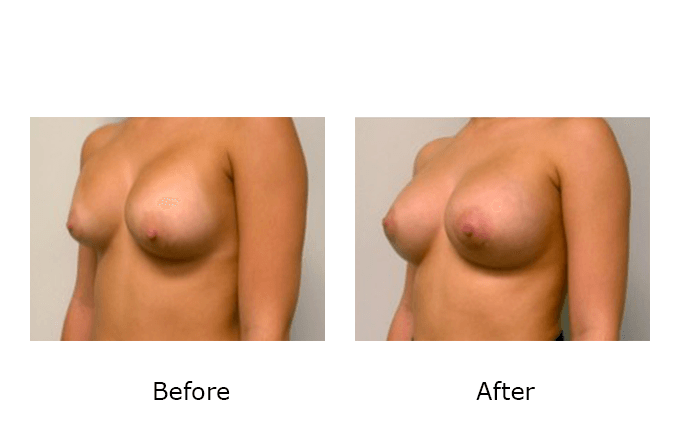
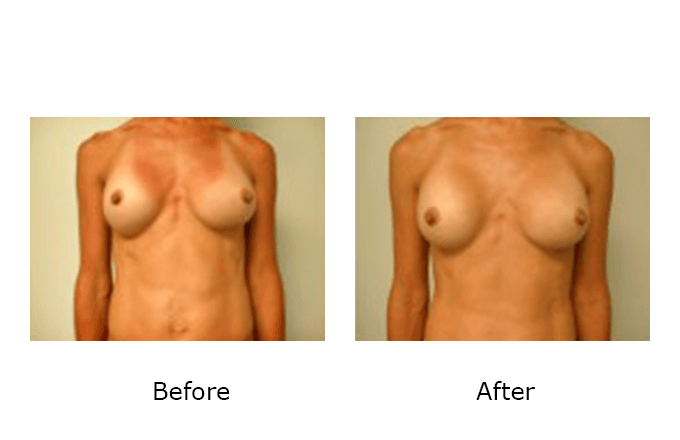
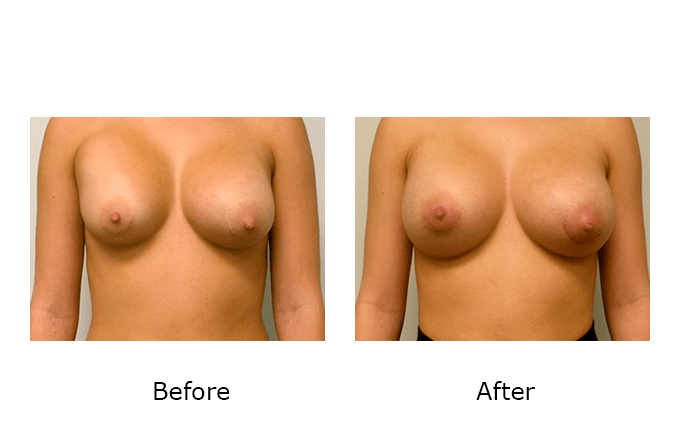
Capsular contracture is the most common reason for breast implant revision surgery. At lower grades, it causes firmness. At higher grades, it produces visible distortion, chronic pain, and a breast that is cold, hard, and unresponsive to touch. The result bears no resemblance to a natural breast.

Baker Grade III and IV contractures require surgery. There is no massage protocol, no medication, and no non-surgical treatment that reliably resolves severe contracture. The only effective treatment is complete removal of the contracted capsule followed by implant replacement — done correctly, by a surgeon who specializes in revision.

Dr. Tachmes has spent 32 years correcting complex capsular contracture cases in Miami Beach, including cases that other surgeons have attempted and failed to resolve.
The Baker Grading Scale

Capsular contracture severity is classified on the Baker scale from I to IV. Only Grades I and II can be managed conservatively. Grades III and IV require surgical revision.


GradeWhat You ExperienceTreatment
Grade IBreast looks and feels completely naturalMonitor
Grade IISlightly firm to touch; normal appearanceConservative
Grade IIIVisibly hard and distorted; discomfort presentSurgery
Grade IVHard, painful, cold, severely misshapenSurgery

Why Total Capsulectomy — Not Capsulotomy

The choice of surgical technique determines whether capsular contracture resolves or returns. Two approaches exist: capsulotomy (cutting or releasing the capsule) and capsulectomy (removing it entirely).

Capsulotomy is faster and involves less dissection, which is why many general plastic surgeons default to it. It also has a recurrence rate that many revision specialists consider unacceptably high — the capsule is still there, only loosened. Without removing the source of the contracture, re-hardening is common.

Dr. Tachmes performs total capsulectomy — complete excision of the entire capsule, leaving no contracture tissue behind. For certain cases, he performs en bloc capsulectomy, removing the capsule and implant together as a single intact unit without disrupting the capsule shell.

After capsule removal, the pocket is thoroughly irrigated with triple antibiotic solution to eliminate subclinical bacterial contamination — a leading driver of contracture formation that is often overlooked.

What Happens During Surgery

Under general anesthesia, Dr. Tachmes removes the entire contracted capsule using meticulous dissection. The surgical pocket is then irrigated with antibiotic solution.

A new implant is placed using a no-touch technique to minimize bacterial transfer. When the original placement was subglandular (above the muscle), Dr. Tachmes may convert to submuscular placement, which has a lower contracture recurrence rate.

Drains are typically placed and removed within the first 7–10 days. A soft compression garment is worn for 6 weeks.


Recurrence Prevention

Capsular contracture can recur after revision if the surgery doesn't address the root causes. Dr. Tachmes reduces recurrence risk through complete capsule removal, antibiotic irrigation, no-touch implant placement, and pocket conversion from subglandular to submuscular when indicated.

In patients with prior radiation or multiple recurrences, acellular dermal matrix (ADM) may be added to reinforce the pocket and further reduce recurrence risk.

Recovery at a Glance

Surgery duration: 2–3 hours

Anesthesia: General

Drains: 1–2 drains, removed at 7–10 days

Return to work: 1–2 weeks (desk work)

Compression garment: 6 weeks

No strenuous activity: 6–8 weeks

Final results visible: 3–6 months


Choosing the Right Surgeon

Capsular contracture correction is one of the most technically demanding revision procedures. The quality of the capsule removal, the thoroughness of decontamination, and the technique of implant placement all affect whether the contracture resolves permanently or returns.

Dr. Tachmes' practice focuses exclusively on breast revision — not general plastic surgery with revision cases mixed in. That specialization translates to technique refinement and outcome consistency that generalists cannot replicate.

What to Expect After Capsular Contracture Surgery

Recovery from total capsulectomy with implant replacement is more involved than a straightforward implant exchange. The more extensive dissection required to remove the capsule means additional healing time and activity restriction.

Most patients describe the first week as manageable with pain medication and activity limitation. Drains are removed at the first follow-up appointment. The majority of patients return to desk work within 10–14 days.

The compression garment worn for 6 weeks serves two purposes: reducing swelling and providing mechanical support to the pocket while it heals. Removing it prematurely — or returning to exercise too soon — increases recurrence risk.

Final results are not immediately visible. Swelling from capsule removal and pocket repair can take 3–6 months to fully resolve. The new implant will settle gradually, and the final shape and softness typically emerge between 4 and 6 months post-operatively.

Dr. Tachmes monitors each patient closely through the recovery period with multiple follow-up appointments to ensure the pocket heals correctly and recurrence is not developing.

Capsular Contracture Treatment FAQs

What are the grades of capsular contracture?
Capsular contracture is classified on the Baker scale from Grade I to IV. Grade I: the breast looks and feels completely natural. Grade II: appears normal but feels slightly firm — no pain, no distortion. Grade III: visibly distorted and noticeably firm; some discomfort present. Grade IV: hard, painful to the touch, cold, and severely misshapen — surgery is the only effective treatment. Dr. Tachmes specializes in correcting Grade III and IV cases.
When is surgery necessary for capsular contracture?
Surgery is necessary for Baker Grade III and Grade IV capsular contracture. Grade III presents with visible distortion and firmness that does not improve on its own. Grade IV involves pain and severe deformity that significantly impacts quality of life. Non-surgical treatments have not demonstrated reliable long-term efficacy for Grade III or IV contracture. Dr. Tachmes evaluates each patient individually and recommends surgery when the contracture is causing significant aesthetic or physical problems.
What is Dr. Tachmes' approach to capsular contracture revision?
Dr. Tachmes performs total capsulectomy — complete removal of the entire hardened capsule — rather than capsulotomy, which simply releases or loosens the capsule and carries a high recurrence rate. He irrigates the pocket with triple antibiotic solution, uses a no-touch technique for implant placement, and may convert from subglandular to submuscular placement. For appropriate cases, he performs en bloc capsulectomy, removing capsule and implant as a single intact unit.
How long does recovery take after capsular contracture revision surgery?
Most patients return to light desk work within 1–2 weeks. Drains are removed at the first follow-up appointment (7–10 days). A compression garment is worn for 6 weeks. Strenuous activity and upper body exercise are avoided for 6–8 weeks. Final results — with swelling fully resolved — are visible at 3–6 months post-operatively. Dr. Tachmes provides individualized recovery protocols for each patient.

Submit Your Case for Dr. Tachmes' Personal Review

Every consultation starts with Dr. Tachmes personally reviewing your photos and history — not a coordinator or PA. Submit your case and receive a direct response about your capsular contracture treatment options.

Submit Your Case for Dr. Tachmes' Review Call Now: 786-603-9074